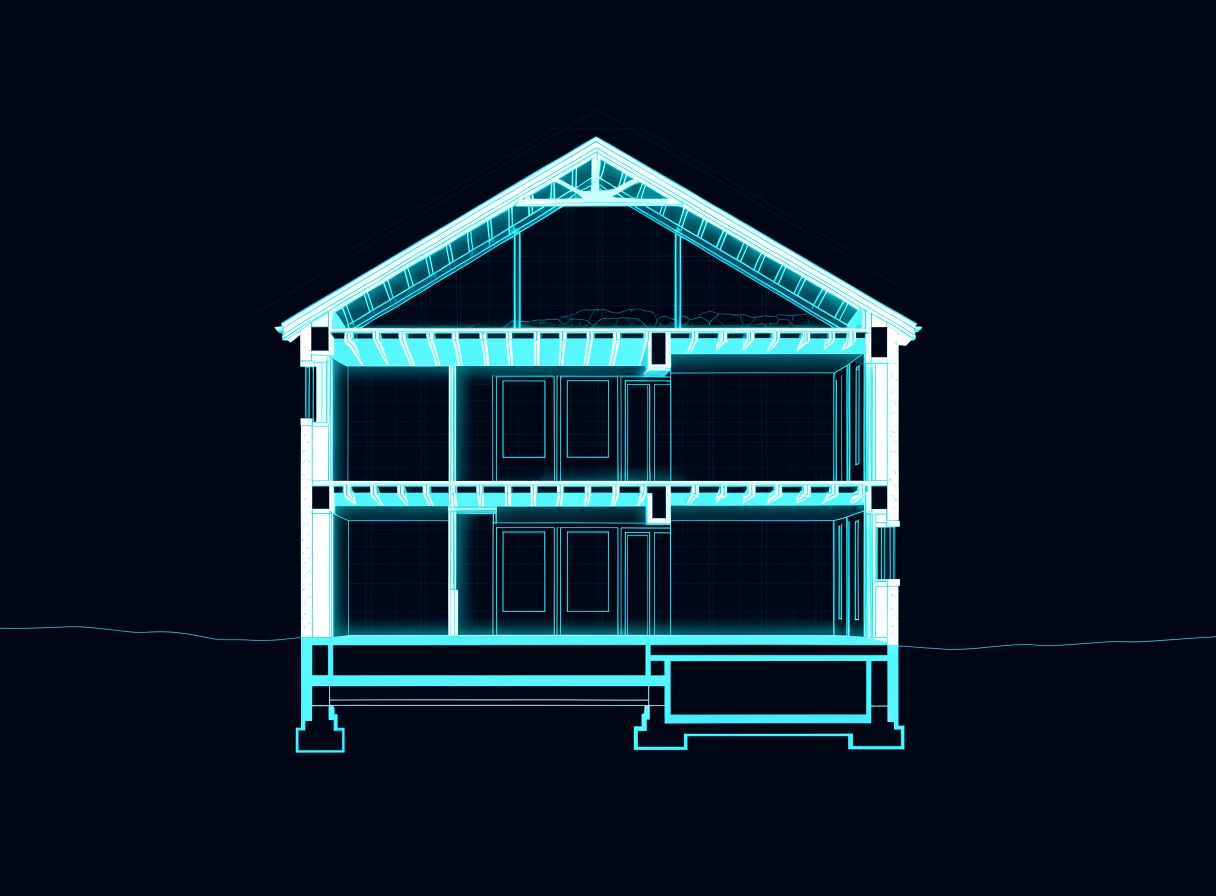
Ottawa is a difficult city to build in and an even more difficult one to maintain a building in. Sixty degrees of annual temperature swing, roughly a hundred and twenty freeze-thaw cycles a year, sensitive marine clay under much of the urban area, and a housing stock that runs continuously from 1890s brick in Sandy Hill to a subdivision framed last spring in Half Moon Bay. A home inspection here has to be a local exercise, because the failure modes are local.
Ottawa’s housing stock, decade by decade
Ottawa is unusual among Canadian cities in how completely its housing spans the last hundred and thirty years, and each era brings a predictable set of findings. Knowing which decade you are standing in tells an inspector what to go looking for.
| Era | Where | What defines the inspection |
|---|---|---|
| Pre-1940 | Glebe, Sandy Hill, Centretown, Hintonburg, Old Ottawa South & East, New Edinburgh, Rockcliffe | Knob-and-tube, stone and early concrete foundations, balloon framing, galvanized supply, vermiculite, and decades of renovation quality ranging from excellent to alarming |
| 1945–1965 | Westboro, Alta Vista, Nepean, Bells Corners, Elmvale | Post-war bungalows on large lots, 60-amp services, cast iron drains, original windows, clay sewer laterals under mature trees |
| 1965–1980 | Nepean, Gloucester, Beacon Hill, Blackburn Hamlet, older Orléans, Kanata’s Beaverbrook | Aluminum branch wiring, first-generation insulation levels, aging first-replacement roofs, buried oil tank remnants |
| 1985–1997 | Kanata, Barrhaven’s Longfields, Orléans’ Fallingbrook, Gloucester | Poly-B supply piping, failed sealed window units, second-round systems replacement all arriving at once |
| 2000–2015 | Stittsville, Avalon, Chapman Mills, Findlay Creek, Kanata Lakes | Builder-grade components reaching end of first life, settled grading, sump dependence, HVAC balance |
| 2015–today | Half Moon Bay, Riverside South, Kanata North, Cardinal Creek, Embrun | PDI and warranty work: insulation coverage, bath fan venting, air sealing, grading, HVAC balance |
Foundations and the ground underneath
Much of Ottawa is built on Champlain Sea sensitive marine clay — Leda clay — which shrinks as it dries and swells as it wets. Houses on it move seasonally, and the signature is doors that stick in August and free up in November, with fine diagonal cracking that opens and closes through the year.
This is normal. What is not normal is progression. Cracking that widens year over year, horizontal cracking in block with inward bowing, or stair-step cracking that keeps growing indicates differential settlement rather than seasonal movement, and that is a structural engineer’s question rather than an inspector’s. The most common local aggravator is a large mature tree close to the foundation, drawing moisture out of the clay through a growing season.
Older parts of the city carry rubble stone and early concrete foundations. Neither is a defect. What matters is mortar condition, whether anyone has parged over a water problem rather than fixing it, and whether water is actively entering.
Read the full guide to Leda clay and Ottawa foundations →
Basements, drainage and water
Basement moisture is the most common homeowner complaint in Ottawa and the most commonly misdiagnosed. There are three distinct problems that feel identical: summer condensation on cool surfaces, seepage through the foundation following rain and melt, and outright leaks. They have completely different fixes, and the expensive one is only correct for a minority of cases.
Roughly eighty percent of Ottawa basement water problems are solved outside the house for a few hundred dollars — gutters, downspout extensions discharging at least 1.8 metres from the wall, and re-grading soil that has settled back toward the foundation over the decades. Sump pump condition and discharge routing matter enormously in the clay-heavy south and east of the city, particularly Findlay Creek, Riverside South, Barrhaven and Embrun, and a battery backup is not a luxury in a city whose worst water events are spring melts and summer storms.
Read the full Ottawa basement moisture guide →
Roofing and what winter does to it
Ottawa runs roughly a hundred and twenty freeze-thaw cycles a year, and every one of them works on every seal, joint and mortar line in the building. Asphalt shingles here reach the end of their service life faster than the manufacturer’s warranty implies, particularly on poorly ventilated roofs where the attic runs warm.
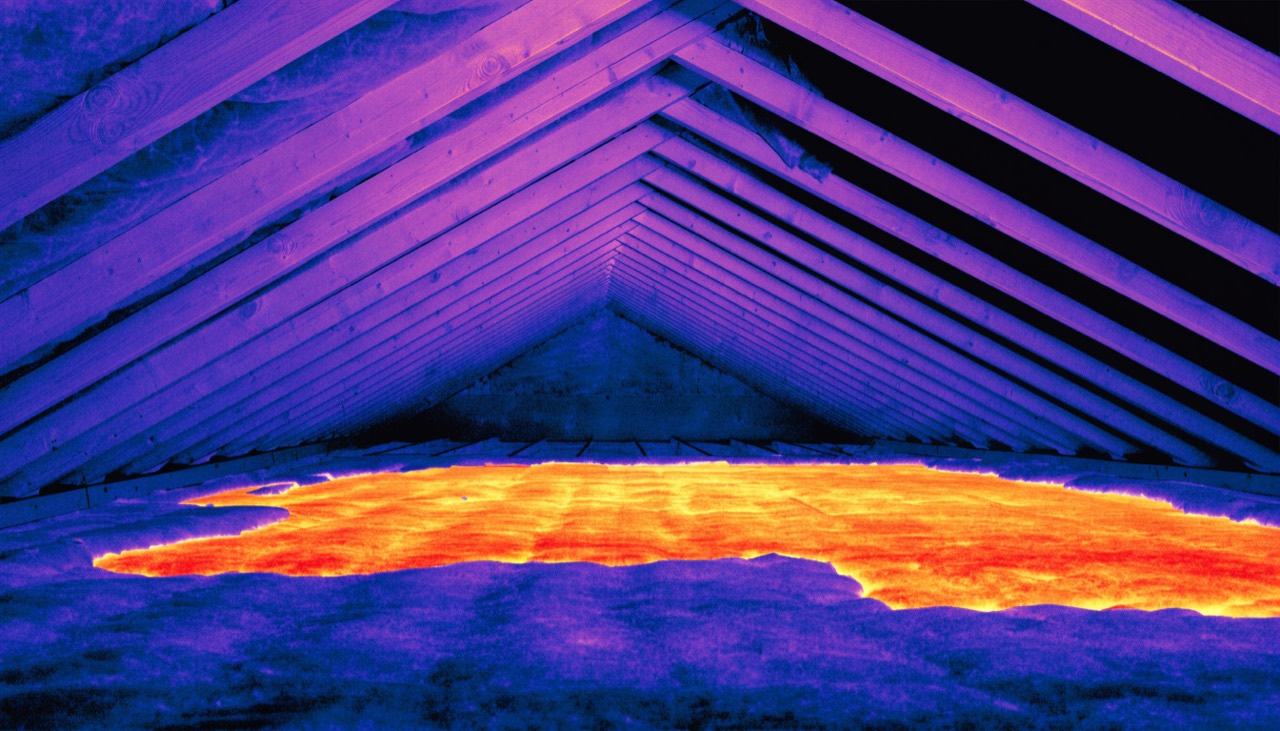
The winter phenomenon that causes the most damage is ice damming. Heat escapes into the attic, snow melts on the warm part of the roof, the meltwater refreezes at the cold eave, and subsequent water backs up under the shingles into the soffit, the wall and the ceiling. It presents as a roof leak but it is almost always an attic problem — air leakage and insulation — wearing a roofing costume, which is why replacing shingles without addressing the attic guarantees a repeat next February.
Electrical: the two systems that stop deals
Two wiring types decide more Ottawa transactions than everything else in the electrical system combined, because Ontario insurers have firm opinions about both.
Knob-and-tube survives in pre-1950 homes across the central neighbourhoods, frequently behind renovations that were described as full rewires. It has no ground, its insulation is eighty to a hundred years old, and it must never be covered with insulation — which is exactly what happens when someone blows cellulose into an attic without checking. Many insurers will not write a policy on a home with active knob-and-tube.
Aluminum branch wiring appears in a defined band of homes built roughly 1965 to 1977 across Nepean, Gloucester, older Orléans and Bells Corners. The wire is not the problem; the terminations are, and remediation with approved connectors by a licensed electrician typically runs $1,500 to $5,000 rather than the $12,000 to $25,000 of a full rewire.
Also worth naming: 60-amp services, Federal Pacific Stab-Lok panels, and double-tapped breakers from later additions.
Plumbing, heating and the insurance questions
Ontario insurers underwrite older homes on four systems — roof, electrical, plumbing and heating — and a buyer who does not ask about them until the week of closing can find the binder falling through.
Plumbing: galvanized steel supply is at end of life wherever it survives. Poly-B, the grey plastic pipe used from roughly 1985 to 1997, is all through Kanata, Barrhaven, Orléans and Gloucester housing of that era, fails at fittings, and is increasingly surcharged or declined by insurers.
Heating: furnace and heat pump age, venting, and — critically in older and rural properties — the presence of an oil tank, above ground or buried. A leaking buried tank is an environmental remediation that can run into six figures.
One seasonal limitation worth knowing: air conditioning cannot be safely tested below roughly 15 °C, so an inspection in an Ottawa January will report the AC as untested. That is a genuine constraint rather than an excuse, and the report should say so plainly.
New construction in Ottawa
Ottawa’s growth corridors — Barrhaven, Riverside South, Findlay Creek, Kanata North, Stittsville, Orléans and out to Embrun and Kemptville — are being framed fast by trades stretched across many sites. New does not mean flawless, and the defects are consistent: attic insulation coverage over garages and bulkheads, bath fans terminating in the attic, air sealing at the garage-house interface, HVAC balance in bonus rooms, and grading that settles within two years of the builder’s final certificate.
None of it is dramatic and all of it is the builder’s to fix — if you document it before the deadline. Ontario’s new home warranty runs on a schedule with a 30-day form and a year-end form, and the year-end deadline is the one owners routinely miss. Book an independent inspection around month ten or eleven, not month twelve.
Rural properties: wells, septics and wood heat
Past the Greenbelt — Manotick, Greely, Osgoode, Carp, Dunrobin, Cumberland, and out to Kemptville, Russell and Winchester — you inherit two utilities along with the house. A well that has to produce enough clean water year-round, and a septic system that has to absorb everything you send it.
Both fail expensively. A failed leaching bed is a $20,000 to $40,000 project. A well with poor sustained recovery may have no economic fix at all. Neither is covered by a standard home inspection, and a well flow test that runs for five minutes tells you essentially nothing — recovery behaviour under sustained draw is the whole question.
Add to that wood heat, which is genuinely practical out here when the power fails for four days, and which almost every Ontario insurer wants documented with a WETT inspection before they will bind coverage.
Radon in the Ottawa Valley
Radon is a radioactive gas produced by uranium decaying in soil and bedrock, and it is the leading cause of lung cancer in Canadians who have never smoked. Health Canada’s 2024 Cross-Canada Survey found approximately 17.8% of Canadian homes — roughly one in five — at or above the 200 Bq/m³ guideline. Ottawa Valley geology is the kind that produces radon.
The critical point for buyers: results vary enormously between neighbouring houses of the same age built by the same builder, because what governs the number is that specific soil, foundation and set of cracks. Your neighbour’s reading tells you nothing. It cannot be seen, smelled, or inferred during an inspection — it has to be measured, ideally over 91 days during the heating season.
The good news is that it is one of the few serious home problems with a reliable permanent fix, at $2,500 to $4,000.
What Ottawa buyers should actually do
- Call an insurance broker on day one of your conditional period with the listing details. Ask what they would need to write the policy. This single call prevents the most common late-stage disaster in Ottawa transactions.
- Scope the sewer on anything pre-1980, especially on a lot with mature trees. It is $200 to $400 against a $12,000 to $20,000 failure.
- Ask whether thermal imaging is included before comparing prices. A $399 inspection plus a $200 infrared upgrade is not cheaper than a $429 inspection with it included.
- Attend the inspection. The report is the deliverable; the three hours walking the house is the education.
- Verify credentials and insurance. Ontario does not license home inspectors, so this is on you.
- Test for radon, if not before closing then during your first heating season.