Almost every mould call we take is really a moisture call. Mould does not arrive from outside and colonise a dry building; it grows where there is water, and it keeps growing until the water stops. So we do the investigation in that order: find the moisture with infrared and meters, understand where it comes from, and only then decide whether sampling adds anything you did not already know.
The investigation
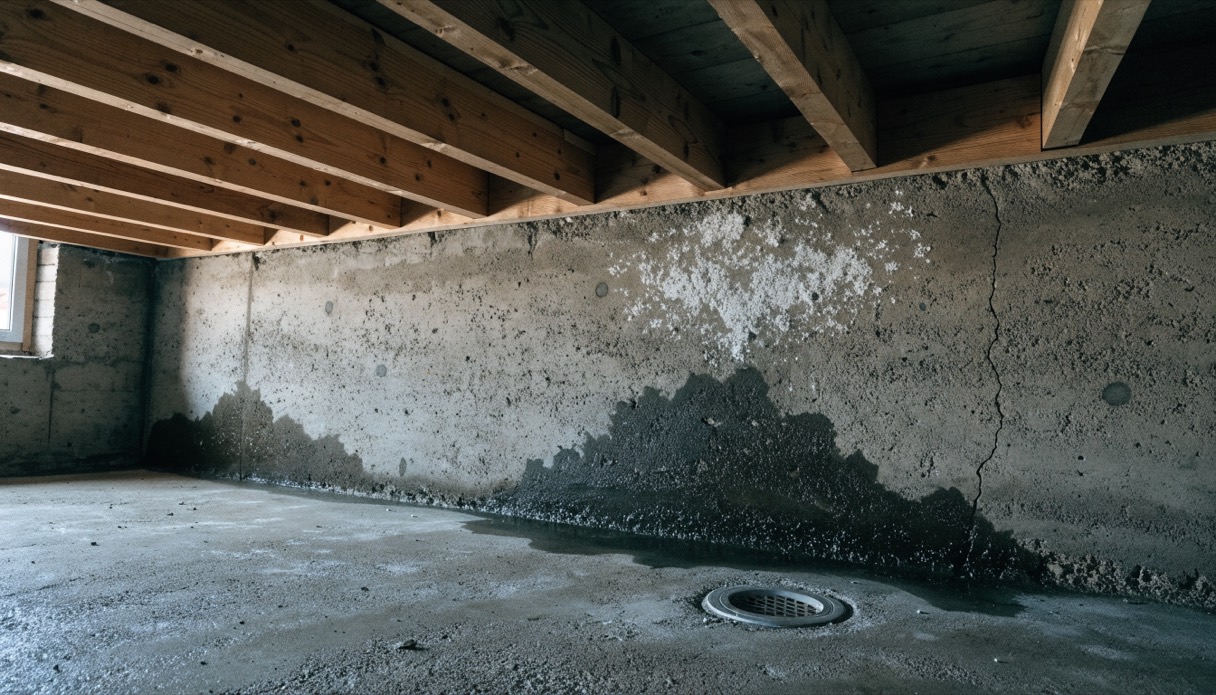
A full infrared scan of the suspect areas, moisture meter confirmation, humidity and dew-point readings, inspection of the building envelope, plumbing and ventilation, and a review of the mechanical systems that control humidity. In an Ottawa house the usual culprits are predictable: an unvented or badly vented bath fan, a basement below the dew point in July, an ice dam that has been wetting the same ceiling every February for six years, or foundation seepage through a cold joint.
The sampling
Where it is warranted, we take air samples indoors and a matched outdoor control, plus surface tape lifts or swabs of visible growth, and send them to an accredited laboratory. You get the lab report along with our interpretation, including the outdoor comparison — which is the part that turns a spore count into a meaningful answer instead of a scary number.
We do not do remediation
This matters. A company that both tests for mould and sells the remediation has an obvious conflict, and the industry has a long history of exploiting it. We are inspectors. If you need remediation we will tell you what scope to ask for, and you can take that scope to whoever you like.
What is included
- Infrared moisture mapping of all suspect areas plus meter confirmation
- Relative humidity, temperature and dew point readings throughout
- Ventilation assessment: bath fans, range hood, HRV, dryer venting
- Air sampling indoors with a matched outdoor control, where warranted
- Surface tape lift or swab sampling of visible growth
- Accredited laboratory analysis with plain-language interpretation
- A written moisture-source diagnosis — the part that actually fixes it
Why this matters in Ottawa
Ottawa basements spend July at high humidity and February below the dew point, which is a nearly perfect mould schedule. Add a housing stock full of finished basements built over uninsulated concrete in the 1970s, and you have the single most common indoor air quality complaint in the city.