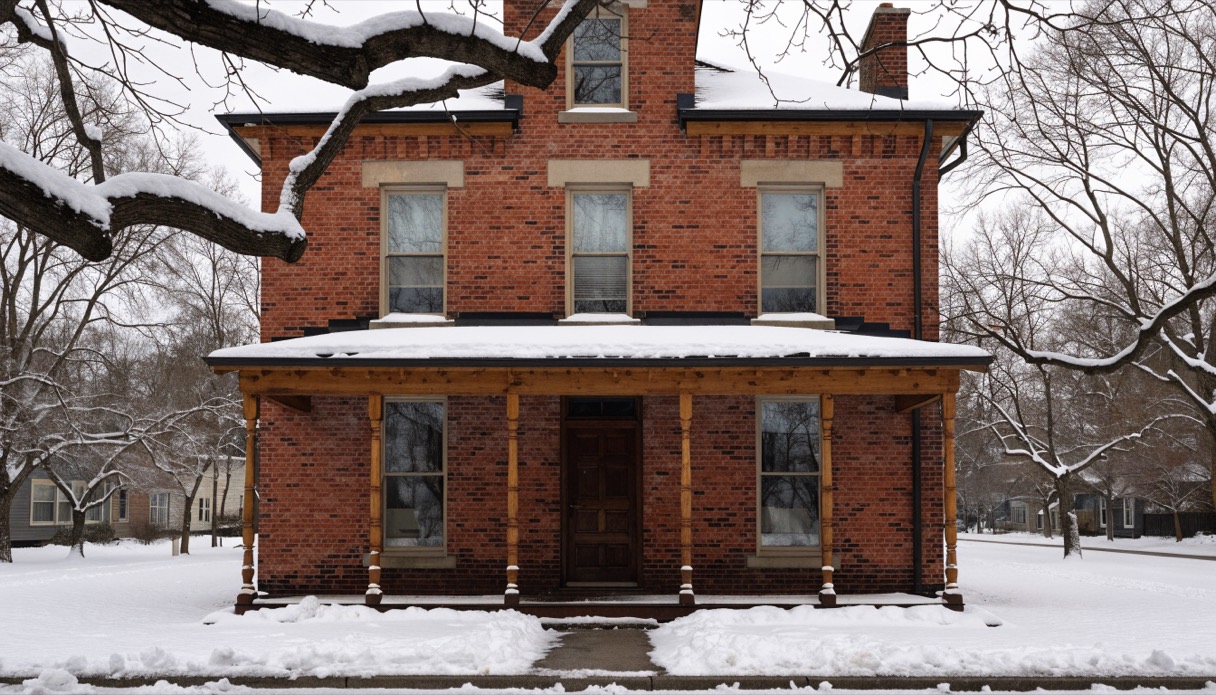
Ottawa has one of the finest stocks of pre-war housing in the country, and inspecting it well requires knowing what was normal in 1890, 1925 and 1948 — because a component that looks alarming to a checklist inspector may be entirely appropriate for its era, while something that looks fine may be a serious hazard. We inspect these houses with more time and a different set of questions.
What we look for that a standard inspection misses
Knob-and-tube wiring surviving behind renovated finishes, and the insulation that has since been blown over top of it. Aluminum branch wiring from the mid-60s to mid-70s and whether the terminations were ever properly remediated. Galvanized supply piping scaled shut. Rubble stone and brick foundations with deteriorated lime mortar. Balloon framing with no fire-stopping. Buried oil tanks. Vermiculite insulation, which may contain asbestos. Structural modifications made during a kitchen renovation by someone who removed more than they should have.
The renovation is often the problem
The original 1910 construction is usually the least of it. It is the 1978 basement, the 1994 addition and the 2016 open-concept main floor that produce the findings — new finishes covering old deficiencies, mixed materials that were never meant to meet, and beams carrying loads that no one calculated.
Insurance is part of the conversation
Ontario insurers ask specific questions about older homes: the age of the roof, the wiring type and panel, the plumbing material and the heating system. A century home that has not had those four updated can be difficult or expensive to insure, and buyers routinely find that out after the condition period has expired. We flag all four explicitly so you can call your broker before you are committed.
What is included
- Extended inspection time — four to five hours as standard
- Wiring investigation: knob-and-tube, aluminum branch, panel condition and capacity
- Foundation assessment for stone, brick and early concrete, including mortar condition
- Structural review of balloon framing, notched joists, and past modifications
- Full infrared scan — invaluable on uninsulated and partially insulated assemblies
- The four insurance questions answered explicitly: roof, wiring, plumbing, heating
- Screening notes for vermiculite, suspect asbestos materials and buried oil tanks
Why this matters in Ottawa
The Glebe, Old Ottawa South and East, Sandy Hill, Centretown, Hintonburg, Mechanicsville, New Edinburgh, Rockcliffe and Westboro are where these houses are, and they are among the most desirable addresses in the city. They are worth buying. They are also worth inspecting properly.